
Ten days give you enough time to experience more than one side of Sardinia without turning the trip into a race. An effective itinerary can start in Cagliari, follow the east coast through Ogliastra and finish in the North East between Olbia and Gallura. This route works particularly well if you arrive and depart from different points; otherwise you need to allow time for the return transfer.
Sardinia in 10 days: a linear itinerary from south to north-east
- Day 1: Cagliari.
- Day 2: Poetto, Molentargius and the southern coast.
- Day 3: Villasimius and Porto Giunco.
- Day 4: transfer towards Tortolì and Arbatax with selected stops.
- Day 5: Santa Maria Navarrese, Pedra Longa and the Baunei area.
- Day 6: the Baunei Coast, Cala Mariolu or another excursion suited to weather and access conditions.
- Day 7: Cala Gonone or the eastern Supramonte, then continue towards Olbia.
- Day 8: San Teodoro and Cala Brandinchi.
- Day 9: Arzachena, Gallura and Palau.
- Day 10: La Maddalena or Olbia before departure.
This is designed as a linear itinerary: arriving in Cagliari and departing from Olbia cuts unnecessary driving. If your return flight or ferry leaves from Cagliari, allow several extra hours to get back and consider removing the final section of the route.
Days 1–2 – Cagliari as your first introduction to the island
Start with the historic centre: Castello, the Bastion of Saint Remy, Marina and Stampace show the urban and cultural side of Sardinia. The second day can be dedicated to Poetto, Molentargius and the Sella del Diavolo, creating a gradual transition from the city to the coastal landscape.
Cagliari also works well for an evening arrival because you can begin the trip without immediately planning a complex itinerary. Two nights are enough for a first visit; a third would be useful if you want to add Pula or Nora.
Day 3 – Villasimius and the sea of the South East
Spend a full day in Villasimius and around Capo Carbonara. Porto Giunco is one of the signature beaches of the area, but there are several alternatives and the best choice depends on wind, season and access arrangements. Do not try to visit five beaches in one day: one or two well-chosen stops are enough.
Return to Cagliari or start moving closer to the east coast if you prefer to reduce the transfer on the following day.
Day 4 – Towards Ogliastra
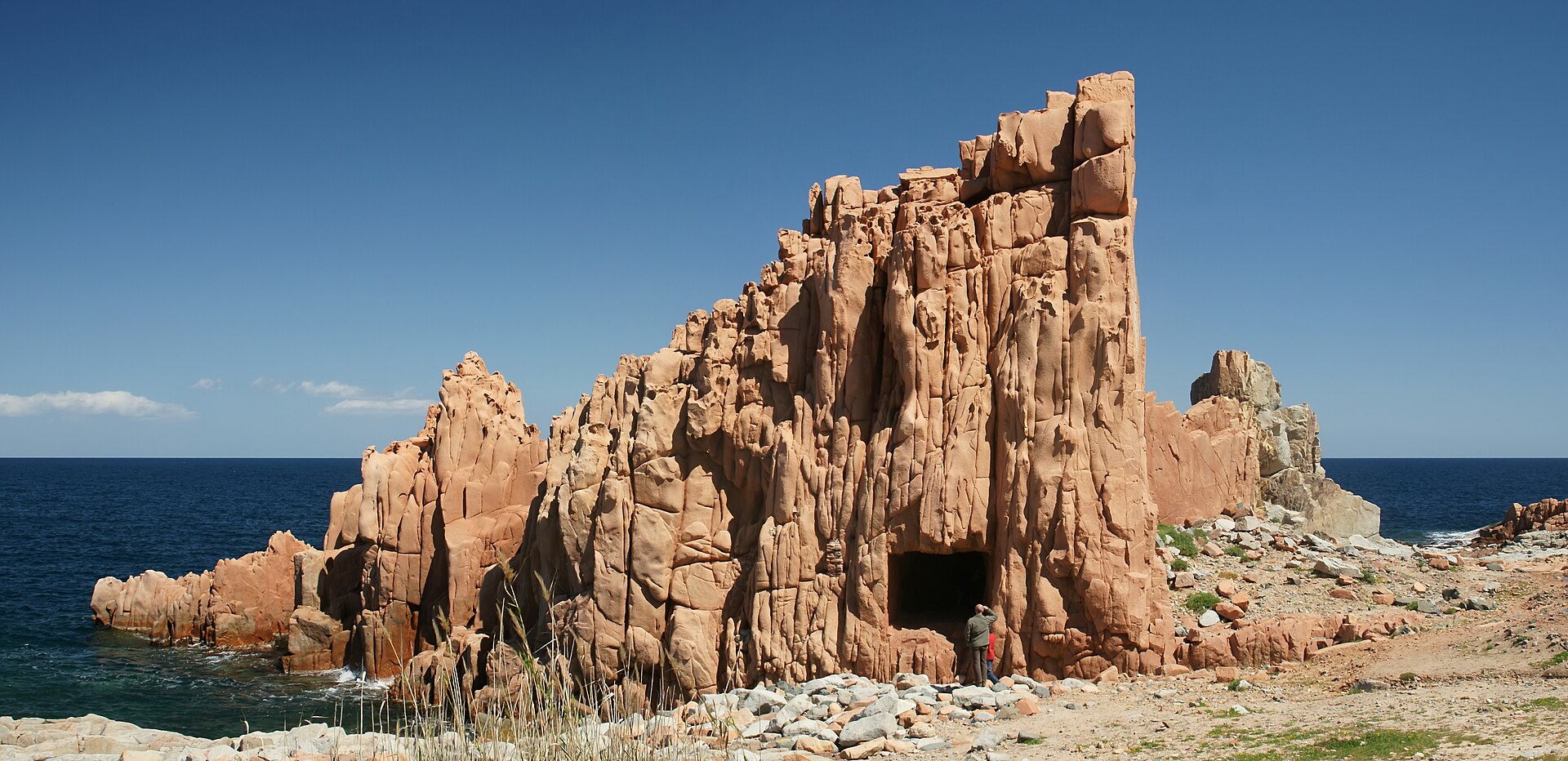
The transfer towards Tortolì and Arbatax introduces a different Sardinia. The Rocce Rosse are a natural stop and offer a first taste of Ogliastra without a long detour. Tortolì can become a base for several nights thanks to its position between the coast and the Baunei area.
A transfer day does not need to be packed with sightseeing. Arriving in the afternoon, taking a walk in Arbatax and having a relaxed dinner is often a better choice than adding distant stops simply because they appear on the map.
Days 5–6 – Santa Maria Navarrese and the Baunei Coast
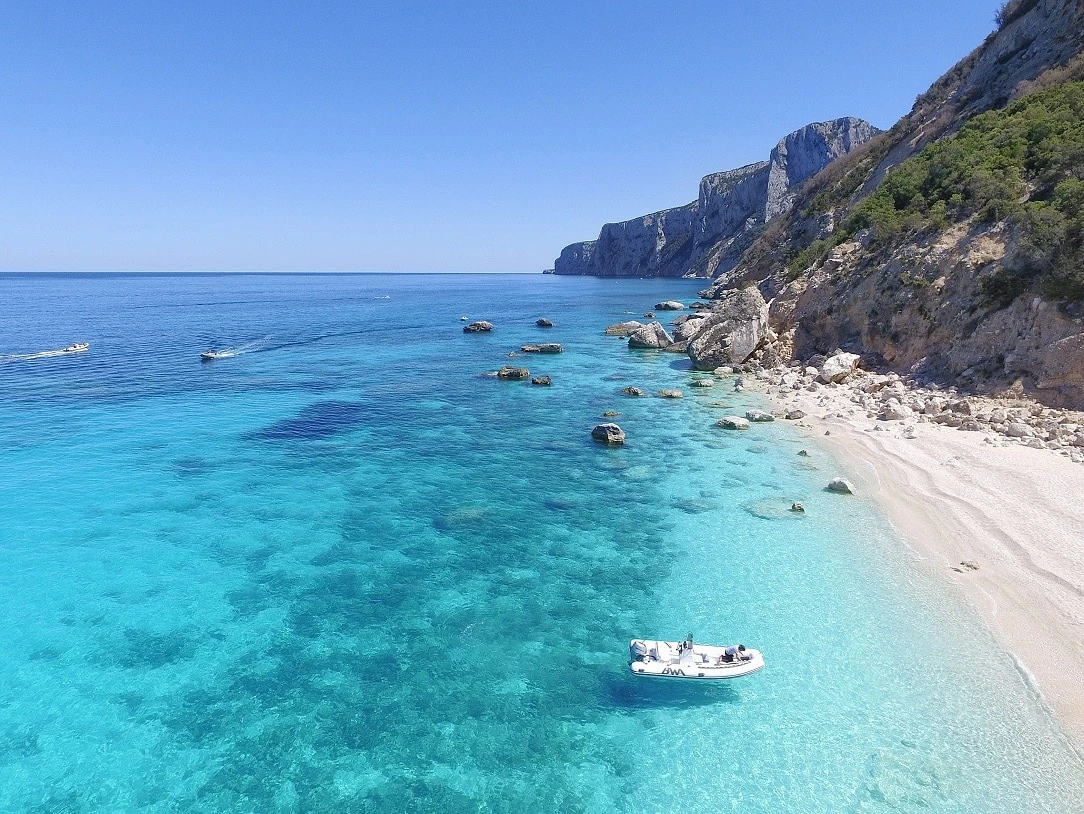
Santa Maria Navarrese is one of the main bases for exploring the Baunei Coast. Pedra Longa can be included in an overland day, while Cala Goloritzè, Cala Mariolu and the other coves require specific planning according to the type of access you choose.
A day on the water should remain almost entirely dedicated to the coast. Sea conditions, access rules and service availability can change, so check them before departure. If you prefer hiking, choose a route suited to your experience, the temperature and available daylight.
Day 7 – Cala Gonone and the transfer towards the North East
Cala Gonone lets you see another stretch of the east coast and connect the sea with the Supramonte. If you have already spent a full day exploring the Baunei coves, choose something different here: a visit around Dorgali, a cave or a walk before continuing towards Olbia.
There is no need to add another long boat excursion. The main purpose of day seven is to create a realistic transition between Ogliastra and Gallura.
Day 8 – San Teodoro and Cala Brandinchi
San Teodoro opens the final section of the trip. Cala Brandinchi, Lu Impostu and La Cinta are the best-known beaches, while the town provides services and a convenient evening base. In high season, always check access and reservation requirements before choosing the beach.
If you are travelling outside summer, spend more time around the lagoon, the town and the landscapes of Capo Coda Cavallo rather than building the entire day around swimming.
Days 9–10 – Gallura and La Maddalena
Day nine can combine Arzachena and some of Gallura’s archaeological sites, such as La Prisgiona, with a stop towards Palau. It is a good time to add a cultural element after several days focused on the coast.
The final day can be dedicated to La Maddalena if your departure time allows. Otherwise, stay in the Olbia area and choose a short programme, avoiding the risk of missing a flight or ferry because of an overly ambitious excursion.
Three bases for ten days
A simple structure is: Cagliari for three nights, Ogliastra between Tortolì and Santa Maria Navarrese for three or four nights, then the North East around Olbia, San Teodoro or Palau for the remaining nights. This keeps the journey moving in one direction.
If you prefer a slower holiday, remove one broad area. Ten days can become a week in the South plus three days in Ogliastra, or five days in Ogliastra and five in Gallura.
When to do this itinerary
June and September are particularly well suited to a journey that combines the sea with road travel. In spring and autumn, you can keep the same structure while replacing some beach days with hiking, towns and archaeology. In July and August, book further in advance and reduce the number of stops on the busiest days.
Frequently asked questions
Are ten days enough to see all of Sardinia? No, but they are enough to combine two or three areas if the itinerary is linear.
Is it better to arrive and depart from different airports? For a Cagliari-to-Olbia itinerary, it is the most efficient option when flights and logistics make it possible.
How many bases should you use? Three are enough: Cagliari, Ogliastra and the North East. More accommodation changes mean more time lost to check-ins and transfers.