Travelling around Sardinia by campervan lets you change landscape every few days, but it requires more planning than it may seem. The island is large, many coastal roads are slow and parking or overnight-stay rules vary from one municipality to another. The best approach is to choose only a few broad areas and build a linear route, always checking authorised camper areas, campsites and local regulations before stopping.
Sardinia by campervan: the first rule is to reduce distances
A campervan trip should not become a race around the island. Distances on the map may look short, but bends, summer traffic and secondary roads can make journeys much longer. For one week, choose just one half of Sardinia; with ten or fourteen days, you can connect two or three broad areas while keeping a realistic pace.
Before departure, always check where parking and overnight stays are permitted and distinguish between ordinary parking, a camper area and a campsite. Do not assume that a space near the sea allows overnight stays or the use of awnings and outdoor equipment.
A 10-day itinerary: north, west and south
- Days 1–2: Olbia, San Teodoro and Gallura.
- Days 3–4: Palau, La Maddalena and Castelsardo.
- Days 5–6: Alghero and Bosa.
- Days 7–8: Oristano, the Sinis Peninsula and Costa Verde.
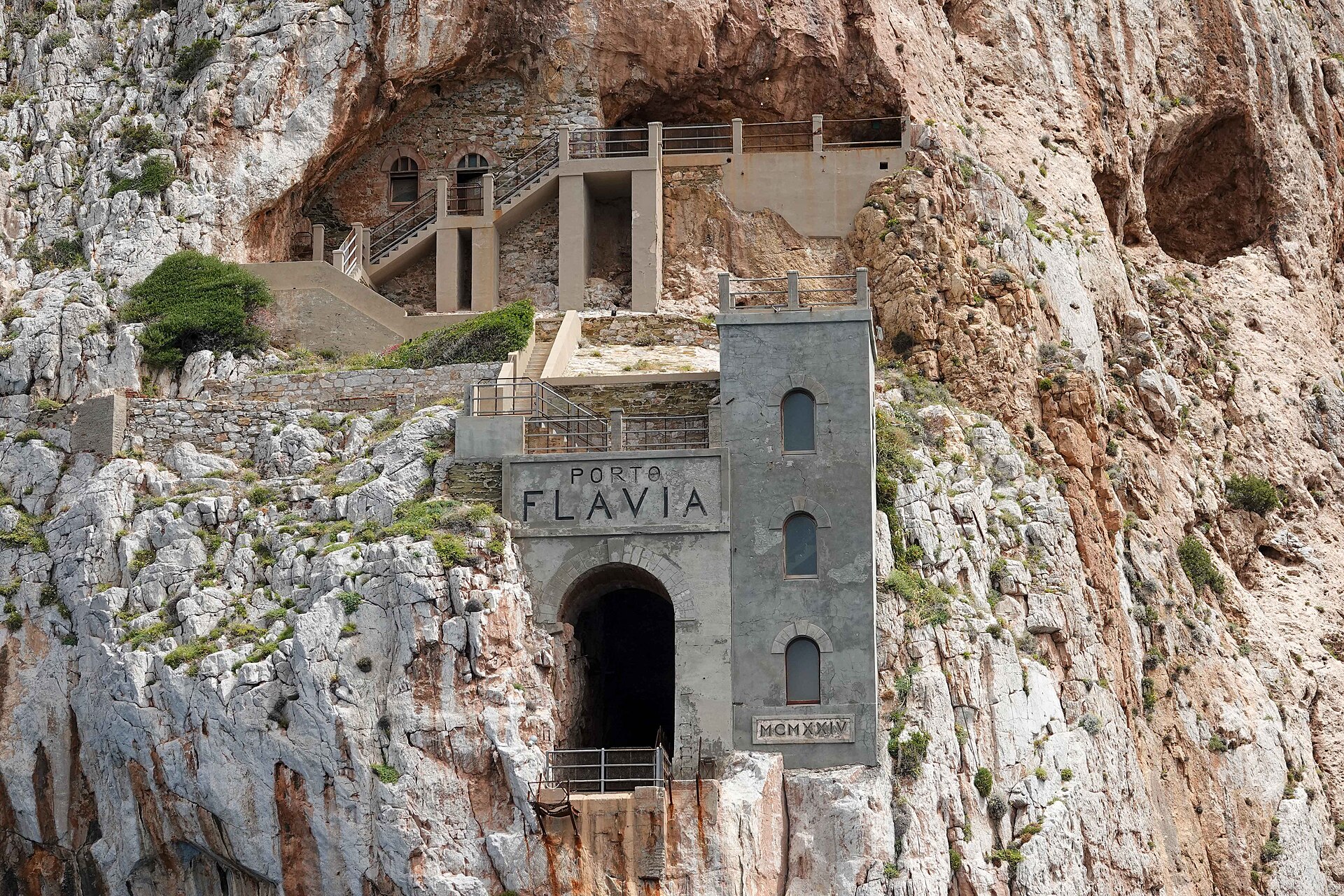
- Days 9–10: Iglesias, Porto Flavia and Cagliari.
This is a demanding but linear route. If you have less time, remove one broad area. If you have two weeks, you can add Sant’Antioco, Carloforte or continue towards Ogliastra.
North East: practical for your first arrival
Olbia is one of the main gateways and gives quick access to San Teodoro, Cala Brandinchi, Arzachena and Palau. Gallura is extremely scenic, but in high season it is also one of the busiest areas. When travelling by campervan, it is better not to change beach every day and instead use one base to explore the surrounding area.
La Maddalena can be included as a day trip, leaving the vehicle in a suitable place on the mainland or checking ferry transport and parking options on the island in advance.
North West: Alghero, Castelsardo and Bosa
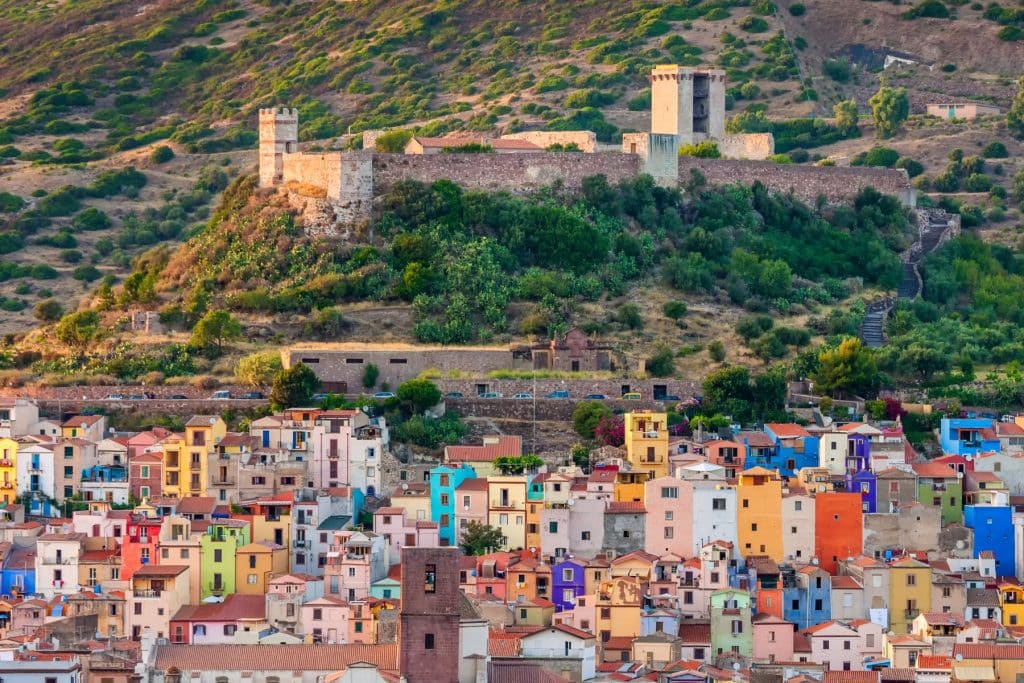
Castelsardo, Alghero and Bosa form a sequence that works particularly well on a road trip. Alghero deserves at least two days for the historic centre, Capo Caccia and nearby beaches; Bosa adds a colourful town and a scenic coastal road that encourages slower travel.
The most scenic roads are not always the fastest or easiest for a larger vehicle. Before taking secondary diversions, check road width, gradients and current conditions.
Sinis Peninsula, Costa Verde and the Iglesiente
The west coast is ideal for travellers looking for open spaces and less urbanised landscapes. Oristano can be a base for the Sinis Peninsula, including Tharros, San Giovanni di Sinis and the local beaches. Further south, Costa Verde introduces dunes, mining heritage and more isolated roads.
Porto Flavia, Masua, Pan di Zucchero and Iglesias deserve a separate stop. Do not try to combine Costa Verde, Iglesias and Sulcis in the same day: real travel times and road conditions make the programme unnecessarily tiring.
Southern Sardinia and Cagliari
Cagliari is useful both for services and for an urban visit. From here you can plan days towards Pula and Nora or towards Villasimius. In high season, the best-known beaches require planning for access and parking, so it is better to choose one area and stay there for the whole day.
East coast: beautiful, but it needs planning
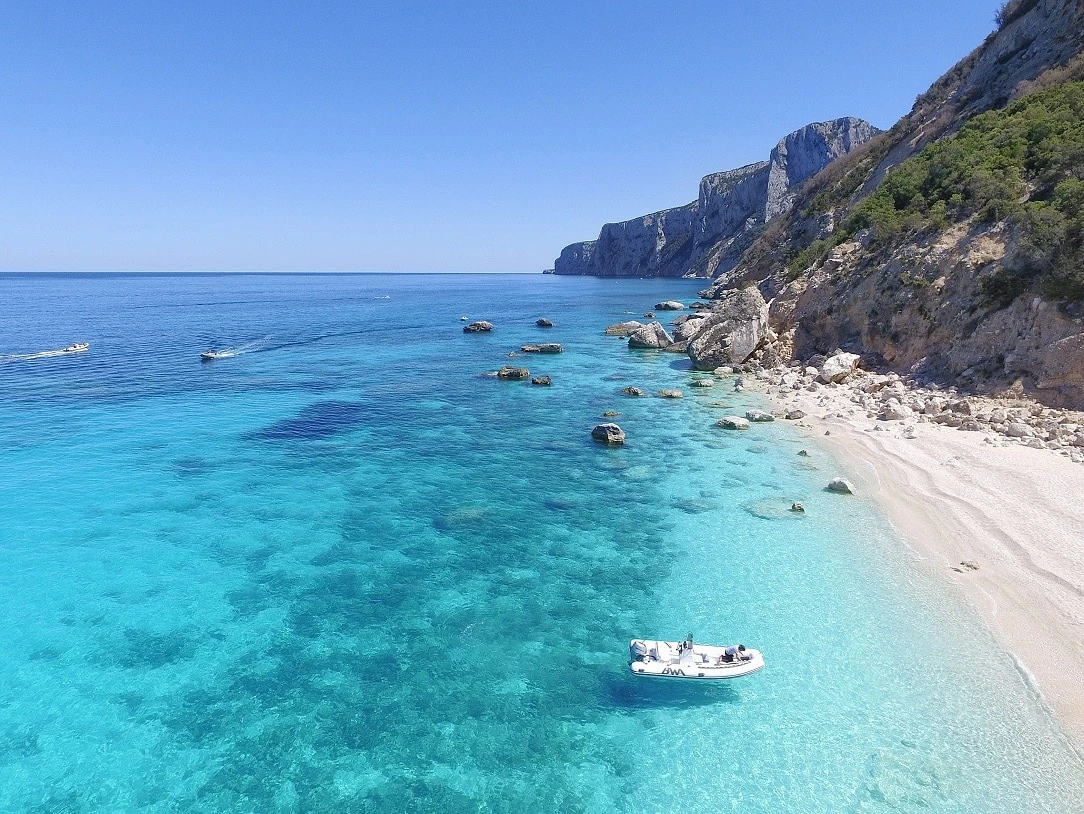
Ogliastra and the Gulf of Orosei are perfect for travellers who want to alternate the sea and mountains. Tortolì, Arbatax, Santa Maria Navarrese and Cala Gonone can be connected over several days. Some coves, including Cala Mariolu and Cala Goloritzè, cannot be reached directly by campervan: they become separate boat or hiking excursions that need to be organised in advance.
When to travel by campervan
May, June, September and October are the easiest months for travelling, with milder temperatures and less pressure on coastal resorts. July and August require more reservations and greater attention to local rules. In winter, a campervan can be an excellent way to explore cities, villages, archaeological sites and inland areas.
Frequently asked questions
Can you sleep anywhere? No. Parking and camping are regulated locally: always check signs, municipal rules and authorised facilities.
How many kilometres should you drive per day? Fewer is better. In Sardinia, 100 kilometres can take much longer than the distance suggests.
Is the coast or the interior better? A balanced trip combines both: the coast offers the most iconic landscapes, while the interior adds villages, archaeology and less congested roads.
How to choose bases without changing area every night
One of the most common temptations is stopping in a different place every evening. In practice, this means constantly packing up the vehicle, finding a new authorised area and giving up some of the best hours of the day. It is more effective to choose three or four bases on a ten-day trip and use them to explore the surrounding area. Two nights in Alghero, for example, let you visit the historic centre, Capo Caccia and nearby beaches without moving the campervan every morning.
The same principle applies in the South: Cagliari or Pula can work as a base for several days, while Iglesias is strategic for Masua, Porto Flavia and the mining landscape. On the east coast, Tortolì or Santa Maria Navarrese reduce driving towards Baunei and Arbatax.
Mistakes to avoid on a campervan trip
Do not build the itinerary only around the kilometres shown by your navigation app, do not arrive at the most famous beaches at peak time without checking access and parking, and do not assume that every panoramic road is suitable for every vehicle. A shorter route with longer stops and enough time to change plans almost always works better than a complete circuit of the island.