Sardinia’s east coast is perfect for a trip that alternates the sea, hiking, small towns and days on the water. In one week you can build a coherent itinerary from Ogliastra towards the Gulf of Orosei without turning the holiday into a race. Arbatax and Santa Maria Navarrese are practical bases for the southern section, while Cala Gonone and Orosei make it easier to explore further north.
Sardinia’s east coast in 7 days: how to organise the trip
The east coast is long and changes significantly from north to south. The easiest way to experience it properly is to split the trip between two bases: four days around Tortolì, Arbatax, Baunei and Santa Maria Navarrese, then three days around Dorgali, Cala Gonone and Orosei. This keeps travel times reasonable and allows each day to have one main focus.
- Day 1: Tortolì and Arbatax.
- Day 2: Santa Maria Navarrese and Pedra Longa.
- Day 3: the Baunei Coast by sea.
- Day 4: Baunei, the Supramonte and an Ogliastra beach.
- Day 5: Dorgali and Cala Gonone.
- Day 6: Cala Gonone, caves or hiking.
- Day 7: Orosei and Baronia.
Day 1 – Tortolì, Arbatax and the Rocce Rosse
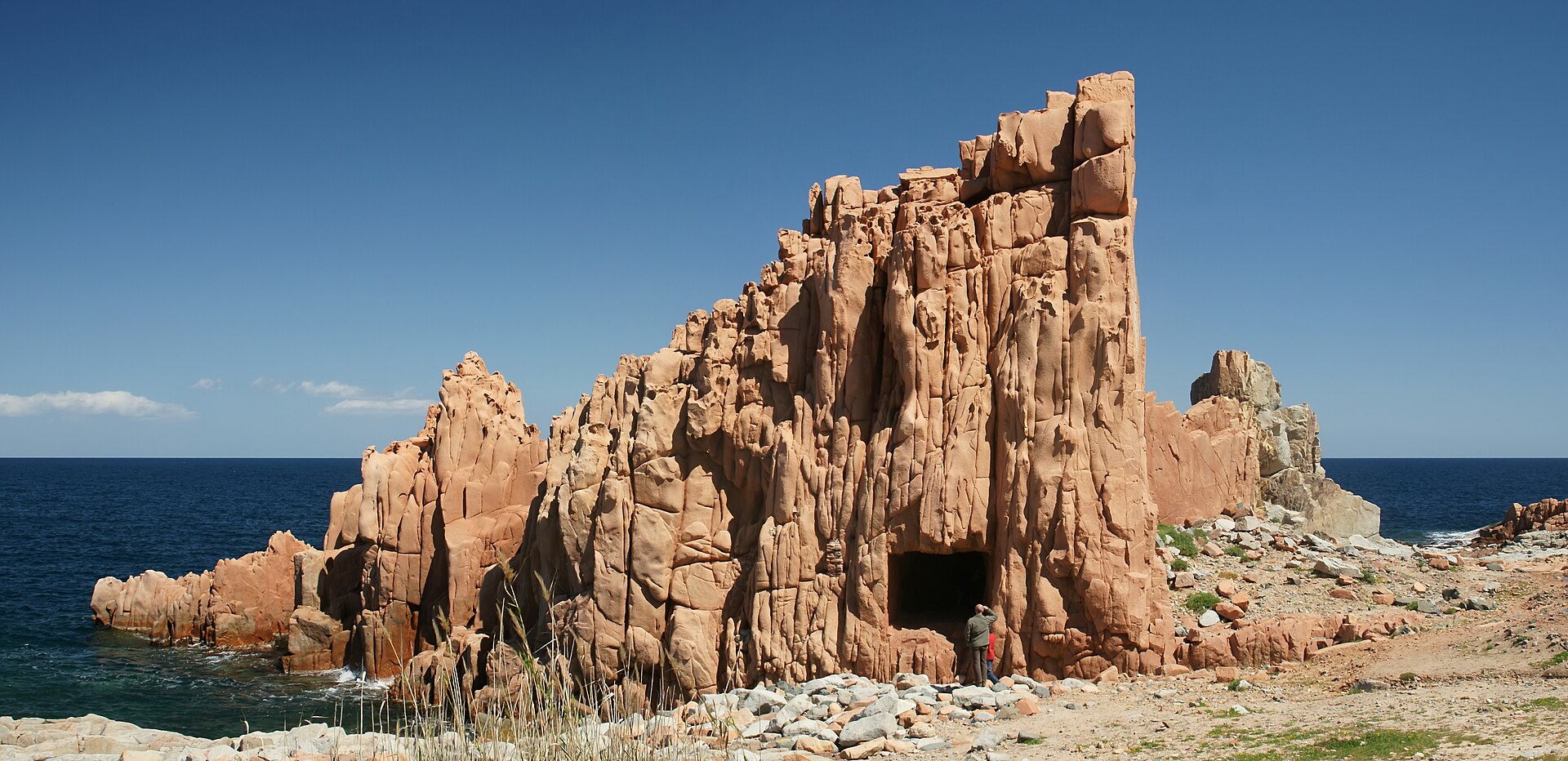
The journey can begin in Tortolì, the main town of Ogliastra, before continuing to Arbatax. The Rocce Rosse are one of the visual symbols of the east coast and are especially worth seeing in softer light. The harbour and the Capo Bellavista headland complete a light first day, ideal after arrival.
If you still have time, choose one of the nearby beaches rather than immediately chasing a remote cove. The aim of the first day is to settle into the rhythm of the area, not accumulate stops.
Day 2 – Santa Maria Navarrese and Pedra Longa
Santa Maria Navarrese is a strategic base for the Baunei Coast. The town is compact, has a marina and gives quick access to Pedra Longa, a large limestone pinnacle that forms one of the coast’s most recognisable landscapes. The area works equally well for a relaxed day or short panoramic walks.
Travellers who enjoy walking can consider easier trails nearby, while the more demanding Supramonte hikes require experience, suitable equipment or local guides.
Day 3 – Cala Mariolu, Cala Goloritzè and the coves of Baunei
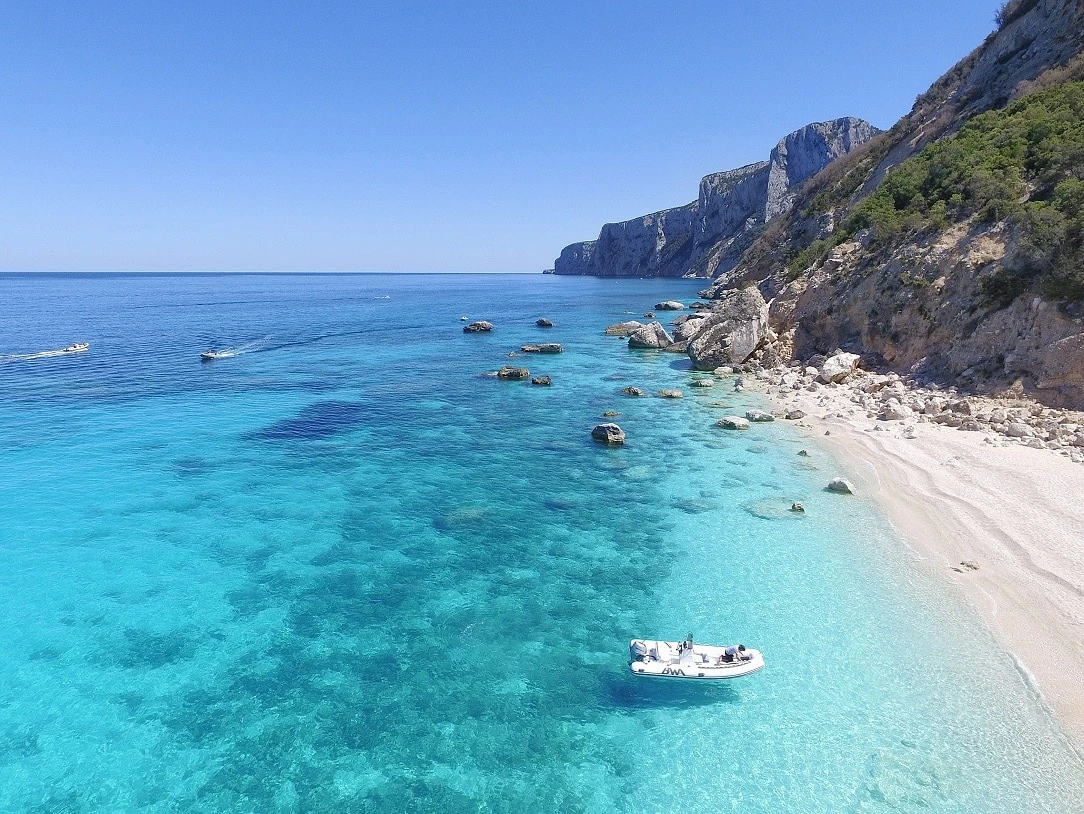
Dedicate a full day to exploring the coast by sea. Cala Mariolu and Cala Goloritzè are two of Sardinia’s most famous images, but the route also passes Cala Biriala, Cala Sisine, Cala dei Gabbiani and dramatic limestone walls that make this stretch of coast unique. The right excursion depends on the season and sea conditions.
Do not plan any other major visits on the same day: between boarding, navigation and stops, the day is already full. Always check the latest information on access, visitor limits and beach rules before departure.
Day 4 – Baunei, the Supramonte and Ogliastra
After a day at sea, change the pace. Baunei tells the story of the territory from above and introduces the Supramonte, its trails and pastoral culture. Alternatively, stay closer to the coast and choose a more accessible beach between Tortolì, Cardedu and Gairo, avoiding another long transfer.
For a completely different landscape, add Gairo Vecchio or Ulassai, especially outside summer. These stops reveal an inland, vertical Sardinia that feels very different from the coves of the previous day.
Day 5 – Dorgali and Cala Gonone
Continue north along the Orientale Sarda. Dorgali is an interesting stop for crafts, archaeology and the surrounding territory, while Cala Gonone is the natural departure point for exploring the central Gulf of Orosei. The landscape changes quickly, from plateaus and woodland to limestone walls above the sea.
In the afternoon, stay in Cala Gonone or reach Cala Fuili, one of the easiest nearby beaches. Avoid planning another long excursion on the same day.
Day 6 – Caves, the sea or hiking in the Supramonte
The sixth day can be adapted to your interests. If you want to stay on the water, choose a boat trip towards Cala Luna or the coastal caves. If you prefer walking, consider routes in the Supramonte around Dorgali and Oliena, remembering that many trails are technical and should not be underestimated.
A good alternative is to spend part of the day in the Lanaittu valley, at Su Gologone or at an inland archaeological site. One of the strengths of the east coast is how quickly you can move from the sea to the mountains.
Day 7 – Orosei and Baronia
Finish in Orosei and on the beaches of Baronia. The historic centre is ideal for a walk among churches and squares, while the coastline offers broader beaches than the coves beneath the Supramonte. If you have time, continue towards Siniscola, Santa Lucia or Capo Comino, but do not turn the final day into a completely new itinerary.
When to do this itinerary
May, June, September and early October are particularly well suited to this route because they make it easier to combine beaches, hiking and sightseeing. In July and August, access, parking and excursions need to be planned further in advance. In spring and autumn, the itinerary remains strong by giving more time to Baunei, Dorgali, Ulassai, Gairo Vecchio and inland routes.
Frequently asked questions
Are seven days enough? Yes, if you use two bases and avoid distant detours.
Do you need a car? It is strongly recommended for connecting Ogliastra, Dorgali and Orosei.
Which day should not be rushed? The day dedicated to the Baunei Coast: Cala Mariolu, Cala Goloritzè and the other coves deserve a full day.