
Place · Gairo
Gairo Vecchio
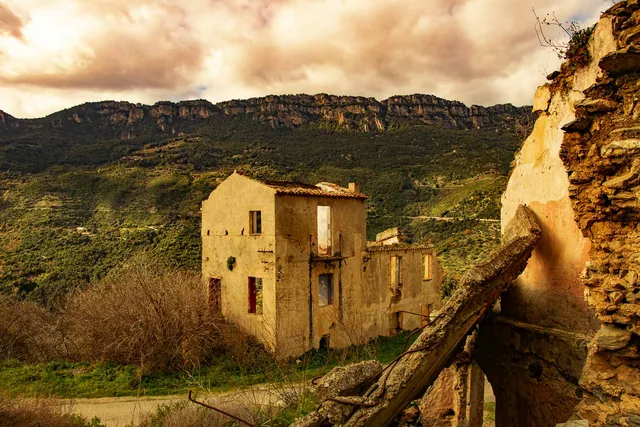
They are known as ghost villages: places where time seems to have stopped, suspended between memory, abandonment and a powerful sense of atmosphere. Among Sardinia’s best known is Gairo Vecchio, a name often interpreted as “land that moves” or “flowing land”.
Walking along its unpaved streets and narrow lanes, among ruins built from granite and schist with traditional mud-and-sand mortar, you can still glimpse fireplaces and traces of domestic life. The silence of the village makes its history feel unusually close.
How to reach Gairo Vecchio
Gairo Vecchio is relatively easy to reach. From Cagliari, follow the SS 125 towards Muravera, then continue through Tertenia and Cardedu towards Gairo Sant’Elena.
From Lanusei, follow the SS198. Once in Gairo Sant’Elena, continue down towards the valley and park near the Church of Sant’Elena. From Osini, the abandoned village can also be reached on foot by following the SP11 north for around 500 metres.
The flood that destroyed Gairo Vecchio
On 14 October 1951, exceptionally heavy rain began falling over Gairo on land that had already suffered landslides and ground movement for decades. The rain continued for several days, causing severe damage and forcing residents to confront a difficult reality: the village was no longer safe enough for the future. Animals were lost, weaker houses collapsed and the slopes around the settlement were badly affected.
How three new settlements emerged after the disaster
When the rain finally eased on 19 October 1951, the community had already begun to understand that relocation was unavoidable. Over the following months and years, residents gradually left their homes and moved to more stable ground. From this process came Gairo Sant’Elena, just above the abandoned village; Gairo Taquisara; and Cardedu, which later became an independent municipality.
What to see nearby
One of the most important natural landmarks near Gairo Vecchio is Perda ’e Liana. At 1,293 metres, it is the highest of Ogliastra’s characteristic limestone “tacchi”. Declared a Natural Monument in 1993, this striking Jurassic rock formation is also wrapped in local legends and traditional beliefs.
Gairo Taquisara
Other interesting places nearby include Gairo Taquisara, a small settlement surrounded by vegetation, and Osini Vecchio, another abandoned village affected by the same flood. Its ruined walls, lanes and empty houses create an equally evocative landscape.
Details to notice in Gairo Vecchio
Some ruined homes still preserve wrought-iron balconies, while others survive only as bare walls. Together they provide a powerful reminder of the flood, the relocation of the community and how quickly a familiar landscape can change.
See also
 Town
Gairo
Gairo
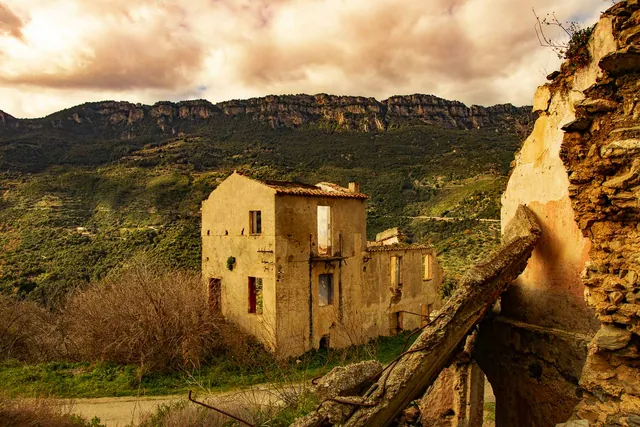
Discover Gairo in Ogliastra: Gairo Vecchio ghost village, Perda 'e Liana, mountain landscapes, archaeology and the wild beaches of Marina di Gairo.
 Beach
Gairo
Su Sirboni Beach
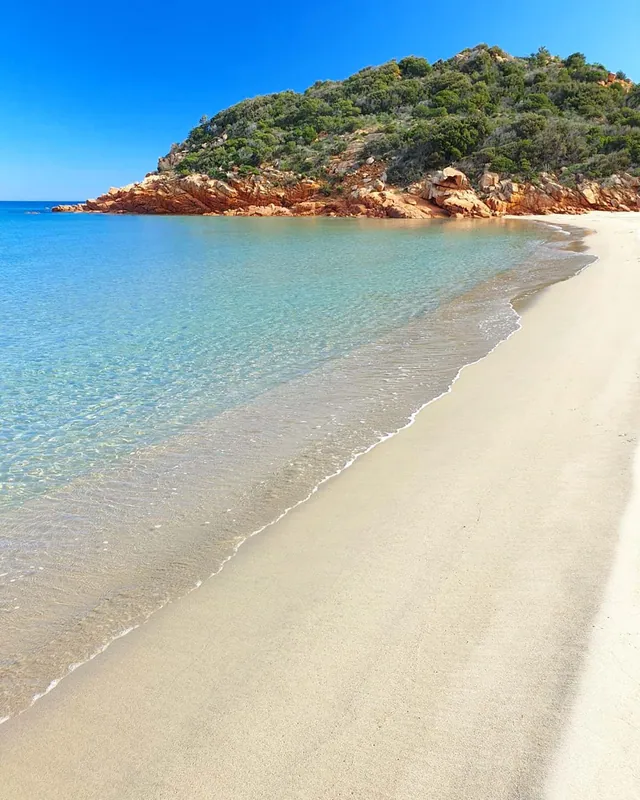
Discover Su Sirboni, a family-friendly beach in Gairo with its fine white sand and shallow, crystal-clear waters, perfect for a relaxing day out.