Archaeological Sardinia lets you read thousands of years of history through nuraghi, sacred wells, necropolises, Phoenician-Punic cities and Roman sites. There is no need to turn the trip into a marathon of monuments: choosing a few major places and connecting them with the surrounding area creates a much more interesting itinerary.
Archaeological Sardinia: where to start
For a first experience, alternate different types of sites. A monumental nuraghe such as Su Nuraxi introduces the Nuragic civilisation; Monte d’Accoddi takes you back to earlier periods; Tharros and Nora reveal Phoenician, Punic and Roman layers. The Sacred Well of Santa Cristina adds the theme of sanctuaries and water.
When available, make time for local museums too: they help explain finds and context that can be difficult to understand on site without a guide.
Su Nuraxi in Barumini
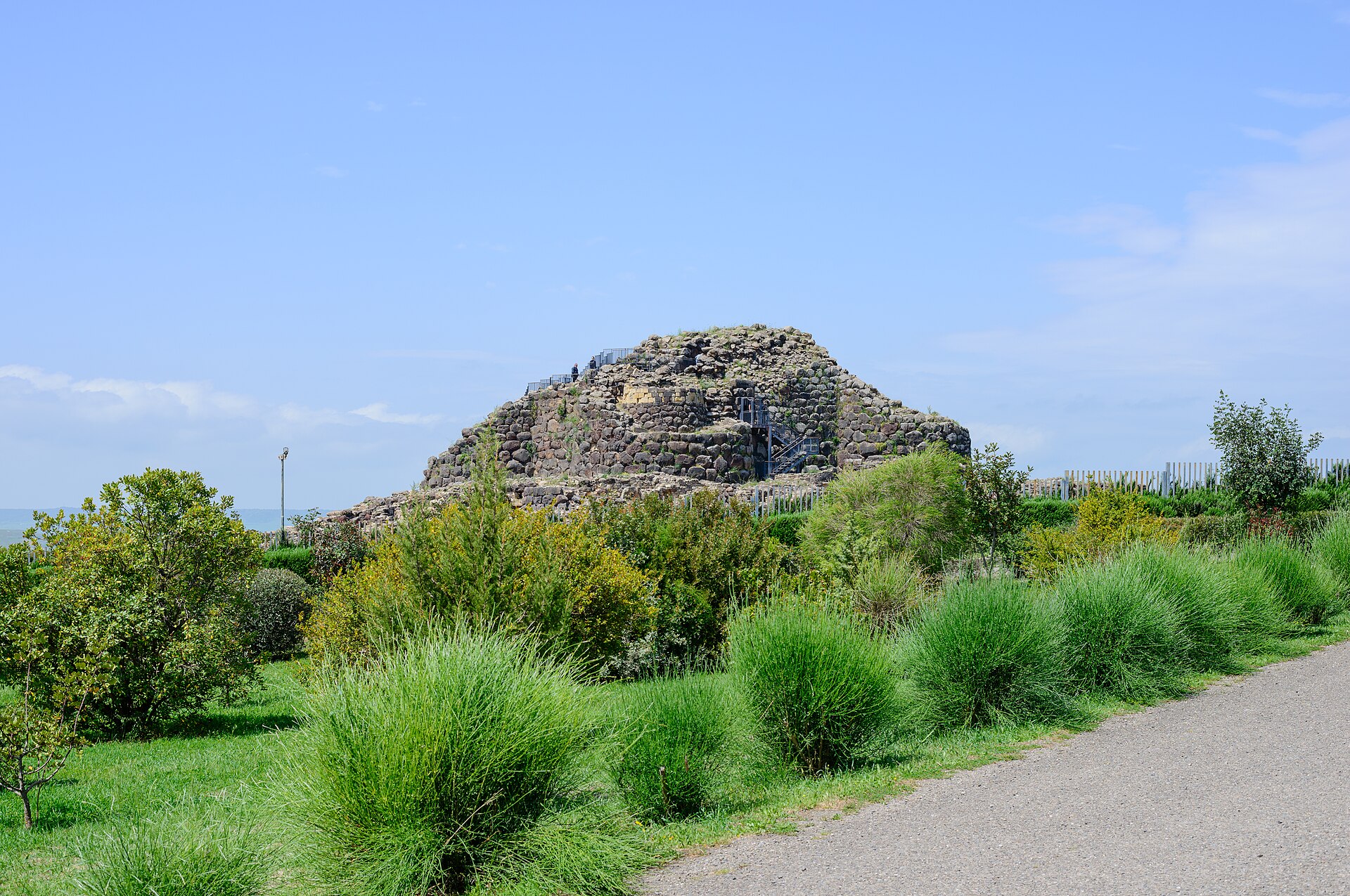
Su Nuraxi is Sardinia’s best-known Nuragic site and one of the main reference points for an archaeological journey. The central structure and surrounding village show how the complex evolved over time. Barumini can be part of a full day in the Marmilla area rather than a quick stop before rushing back to the coast.
Monte d’Accoddi and the North West
Near Sassari, Monte d’Accoddi is a unique pre-Nuragic site on the island. Its monumental form and very early chronology make it ideal for understanding that Sardinian history did not begin with the nuraghi. It can be combined with Sassari, Porto Torres or other sites in the North West.
La Prisgiona and the archaeology of Gallura
The Sacred Well of Santa Cristina
The Sacred Well of Santa Cristina, in the territory of Paulilatino, is one of the most elegant monuments associated with the cult of water. The geometry of its staircase and underground chamber makes the site instantly recognisable. Its location along a central route across the island makes it easy to include in many north-south itineraries.
Tharros and the Sinis Peninsula
Tharros combines archaeology and landscape. The ruins overlook the sea on the Sinis Peninsula and can be paired with Cabras, San Giovanni di Sinis and the beaches of the area. It is a perfect example of how an archaeological site becomes more meaningful when experienced together with the surrounding territory.
Nora and southern Sardinia
Nora, near Pula, is one of the major ancient sites of southern Sardinia. Its seaside location and Roman remains make it possible to build a day that combines archaeology and the coast. From Cagliari, it fits easily into an itinerary towards Chia or Teulada.
Other sites to consider
The archaeological heritage is far broader: giants’ tombs, domus de janas, smaller nuraghi, villages and sanctuaries are spread across the entire island. In Ogliastra, the Nuoro area and Sulcis, it is possible to build itineraries dedicated entirely to archaeology, but for a first trip it is better to choose well-documented and easily accessible sites.
A 7-day archaeological itinerary
- Day 1: Cagliari and the Archaeological Museum.
- Day 2: Nora and Pula.
- Day 3: Su Nuraxi in Barumini.
- Day 4: the Sacred Well of Santa Cristina and Oristano.
- Day 5: Tharros and the Sinis Peninsula.
- Day 6: Monte d’Accoddi and Sassari.
- Day 7: Arzachena and La Prisgiona.
It is a linear but fairly intensive route: with more time, add rest days and nearby towns.
Frequently asked questions
What is the most famous site? Su Nuraxi in Barumini is the best-known reference point, but the journey becomes much richer when combined with Santa Cristina, Tharros, Nora and Monte d’Accoddi.
When should you visit? Spring and autumn are ideal; in summer, choose the cooler hours of the day.
Do you need a guide? Not always, but a guided visit can completely change your understanding of the more complex sites.
How to understand an archaeological site instead of simply photographing it
Before the visit, spend a few minutes understanding the period and function of the place. Nuraghi, sacred wells and Punic-Roman cities belong to different worlds and should not be treated as if they were the same. A guided visit, a museum or even careful reading of the information panels can help you recognise walls, towers, living spaces and later building phases that might otherwise look like little more than stones.
Archaeology and territory: the best combinations
Su Nuraxi pairs well with the Marmilla; Tharros with Cabras and the Sinis Peninsula; Nora with Pula and the south-west coast; La Prisgiona with Arzachena and Gallura; Monte d’Accoddi with Sassari and Porto Torres. This approach makes the trip more varied and also helps distribute the visits across realistic travel days.
With children and teenagers
The most monumental sites can be very engaging for families too, especially if the visit is not too long and is alternated with an outdoor stop. In summer, bring water and sun protection; in winter, consider wind and rain, especially at exposed sites.