
Place · Cagliari
Sella del Diavolo
Sella del Diavolo in Cagliari: Legend, History and Views
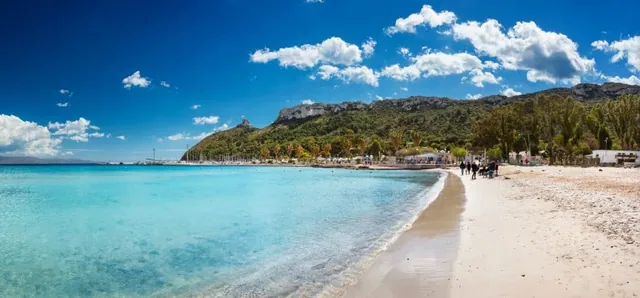
Legend and history meet on the summit of Sella del Diavolo, where Mediterranean vegetation and traces of the past overlook the coast of Cagliari. Its unmistakable profile is one of the city’s defining landmarks, rising above Poetto Beach and the Gulf of Angels.
Panoramic views and ancient legends
Sella del Diavolo rises in the centre of the Gulf of Angels as the coastal extension of Sant’Elia hill. For decades it has been one of the most popular outdoor excursions close to central Cagliari. It is ideal for hiking, including evening walks, and combines panoramic views with archaeological traces spanning thousands of years.
Hiking trails and biodiversity
Trails start near the small beach of Calamosca and from Marina Piccola, climbing across the headland to viewpoints that, on clear days, extend as far as Capo Carbonara. The route also overlooks the 12-kilometre stretch of Poetto and the Molentargius-Saline park behind it. Along the way you may see dwarf fan palms, juniper, wild olive, mastic and euphorbia. The headland also provides habitat for birds such as peregrine falcons, kestrels and Sardinian partridges, as well as foxes and wild rabbits.
Ancient settlements and historical traces
Natural caves around the Sant’Elia headland show evidence of human presence from the Neolithic period. At the highest point are the remains of a Punic temple traditionally linked to the goddess Astarte, while two ancient cisterns—one Punic and one Roman—survive nearby. Foundations are associated with the lost church of Sant’Elia, probably built in the 11th century by Victorine monks together with their monastery. A Spanish-era watchtower also formed part of the coastal defence system against raids. Just minutes from central Cagliari, Sella del Diavolo combines sea views, wild nature and layers of history in a single walk.
See also
 Town
Cagliari
Cagliari
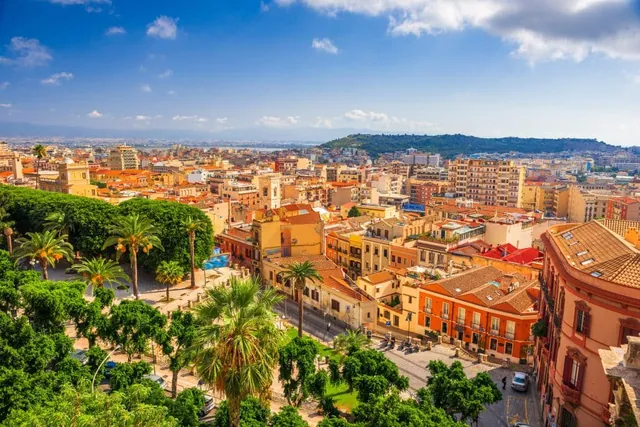
Discover Cagliari, Sardinia's capital: Castello, historic districts, Poetto beach, Molentargius flamingos, museums, viewpoints and local cuisine.
 Beach
Cagliari
Spiaggia del Poetto
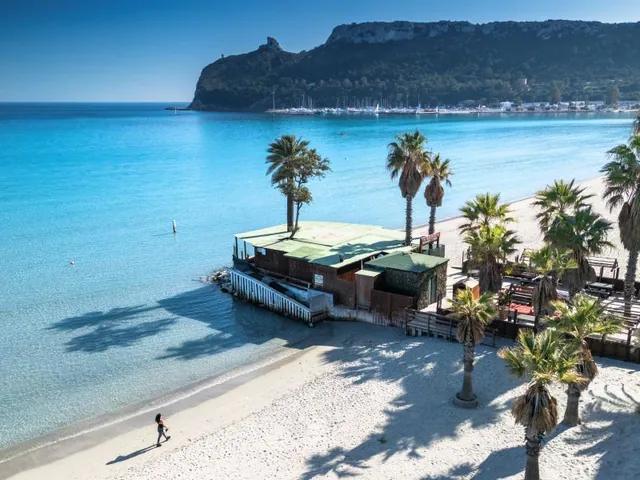
Discover Poetto Beach: a long city beach between Cagliari and Quartu Sant’Elena, with sea, services and the Molentargius wetlands nearby.
 Event
5 October 2026 – 12 October 2026
Cagliari
Tuttestorie – Cagliari
Tuttestorie is a children's literature festival combining books, art, theatre, dance, cinema and new technologies. It is aimed at audiences aged 0 to 16…