PLACES TO VISIT IN SARDINIA
If you think Sardinia is only about spectacular beaches, there is much more to discover. The island is rich in dramatic landscapes, archaeological heritage and historic sites that reveal centuries of local culture and tradition. Caves, villages, archaeological areas and natural wonders are just some of the places worth adding to a Sardinia itinerary.
Whether you are looking for ideas on a rainy day, travelling outside the summer season or simply want to alternate beach time with culture and nature, Sardinia offers countless ways to experience a more authentic side of the island.
Historic communities, traditional villages and local hospitality add another layer to the journey, making it easy to discover stories and places that are often missed on a purely seaside holiday.
Here are some of the most interesting places to visit in Sardinia.
THE BEST PLACES TO VISIT IN SARDINIA
CAVES TO VISIT IN SARDINIA
Some of Sardinia's most impressive natural treasures are hidden underground. One of the best ways to discover them is by visiting the island's caves, where limestone formations, underground lakes and vast chambers reveal a completely different landscape.
On the coast of Baunei, the Grotta del Fico is one of the most fascinating. Inside, stalactites and stalagmites form extraordinary shapes, enhanced by carefully placed lighting. The cave takes its name from the fig tree once found near its entrance.
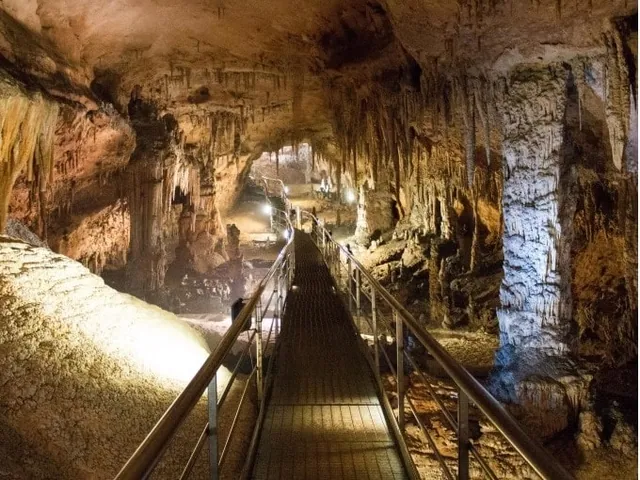
Also in Ogliastra, Grotta Su Marmuri is well worth a visit. Its name refers to marble in Sardinian and reflects the bright appearance of the rock formations inside. The cave develops through a sequence of large chambers shaped by water over thousands of years.
On the opposite side of the island, the Neptune's Grotto near Alghero is one of Sardinia's best-known geological attractions. The entrance lies close to sea level and can be reached by boat or via the dramatic staircase carved into the cliffs. Inside, rock formations and underground pools create an impressive setting.
In south-west Sardinia, in the Sulcis area, the Is Zuddas Caves develop inside Monte Meana. They are known for their remarkable limestone formations and atmospheric underground chambers, carved into very ancient dolomitic rock.
THE BEST ARCHAEOLOGICAL SITES TO VISIT IN SARDINIA
Sardinia has an extraordinary concentration of archaeological sites spanning thousands of years of history. Visiting them is one of the best ways to understand the island beyond its coastline.
In the countryside near Alghero, the Anghelu Ruju Necropolis preserves dozens of prehistoric tombs carved into sandstone. Discovered in the early twentieth century, the site offers a glimpse into communities that lived here thousands of years ago.
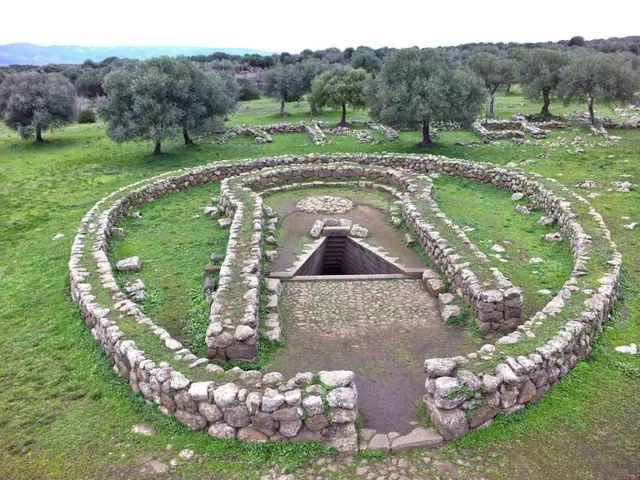
In central-western Sardinia, the Sacred Well of Santa Cristina is one of the island's most striking Nuragic monuments. Its precise stonework and monumental staircase lead to a circular underground chamber associated with the ancient cult of water.
At the southern end of the Sinis Peninsula lies the archaeological site of Tharros. Founded by the Phoenicians and later developed by Carthaginians and Romans, it preserves the remains of temples, baths, streets, mosaics and necropolises in a spectacular coastal setting.
Su Nuraxi is one of Sardinia's most important and best-preserved archaeological sites and has been a UNESCO World Heritage Site since 1997. At its centre stands the Nuragic complex of Barumini, surrounded by the remains of an ancient settlement.
Farther south, the archaeological site of Nora, near Pula, preserves the remains of an ancient city shaped by Phoenician, Carthaginian and Roman history. Its position beside the sea makes it one of the most atmospheric archaeological visits in southern Sardinia.
NATURAL WONDERS TO SEE IN SARDINIA
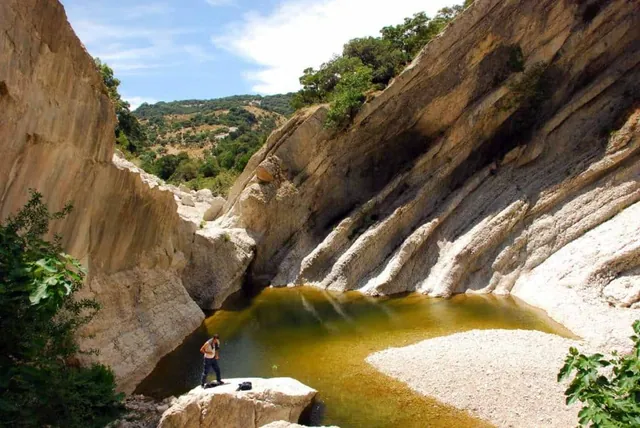
Sardinia is also home to remarkable natural landscapes. The Gorropu Canyon, carved by the Flumineddu river between the territories of Orgosolo and Urzulei, is one of Europe's deepest gorges. Its limestone walls rise for hundreds of metres, creating a dramatic environment for hikers and nature lovers.
On Sardinia's east coast, the Rocce Rosse of Arbatax form a striking wall of red porphyry beside the harbour, especially vivid in the warm light of sunrise and sunset.
Off the north-west coast lies Asinara Island, known for its wild landscapes, biodiversity and unusual history. Much of the island is protected as a national park, with secluded coves, clear water and a network of routes for exploring its natural and cultural heritage.
Sardinia also has historic gardens and botanical parks. The Botanical Garden of Cagliari combines Mediterranean and tropical plants with archaeological remains, while Aymerich Park in Laconi offers woodland paths, unusual plant species and medieval ruins in one of the island's most atmospheric inland settings.
HISTORIC VILLAGES AND CASTLES TO VISIT IN SARDINIA
Sardinia is dotted with castles and historic villages that reflect different periods of the island's past.
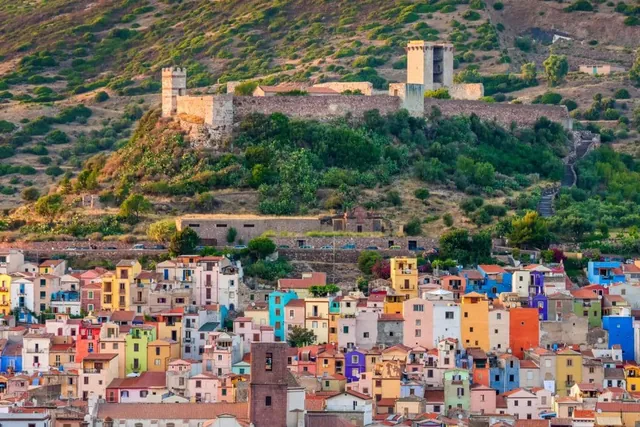
The Malaspina Castle in Bosa is one of Sardinia's best-known medieval fortifications. From its hilltop position it overlooks the colourful old town and the Temo River. Below, the Sa Costa district is a maze of narrow streets and brightly painted houses.
In the Sulcis area, Acquafredda Castle rises dramatically above the surrounding landscape and is one of the most distinctive medieval sites in southern Sardinia.
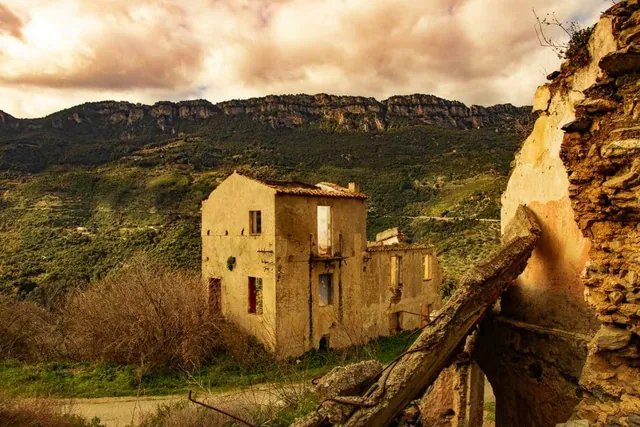
Among the villages worth a stop are medieval Castelsardo, with its cobbled lanes, stone houses and Doria Castle; Orgosolo, internationally known for the murals covering many of its walls and as a base for exploring the Supramonte; and Gairo Vecchio in Ogliastra, an abandoned village where the traces of the past are still clearly visible.
From caves and archaeological sites to canyons, villages and castles, Sardinia offers far more than a beach holiday. Use these places as inspiration to build a trip that combines the island's coastline with its history, landscapes and inland communities.