Town
Barisardo
Bari Sardo, traditionally known in Ogliastra as Barì, faces the sea with long sandy beaches and striking cliffs. It is an ideal base for exploring Sardinia's east coast and is especially popular with travellers interested in water sports.
Things to see in Bari Sardo
Bari Sardo's landscape is particularly interesting from a geological perspective because of its volcanic origins. The Teccu plateau is one of the most distinctive areas: an ancient lava flow descends from the volcanic vent of Sa Iba Manna towards the coast, meeting the sea at Punta Niedda in a landscape of characteristic dark rocks. Teccu is also important for archaeology. The Sellersu nuraghe, positioned above the bay, is one of the area's most accessible nuragic sites and offers wide coastal views. The territory also includes important pre-nuragic remains, including the Domus de Janas at the Pizzu 'e Monti and Funtana e Su Rettore necropolises and the Giants' Tomb of Fragori.
Torre di Barì
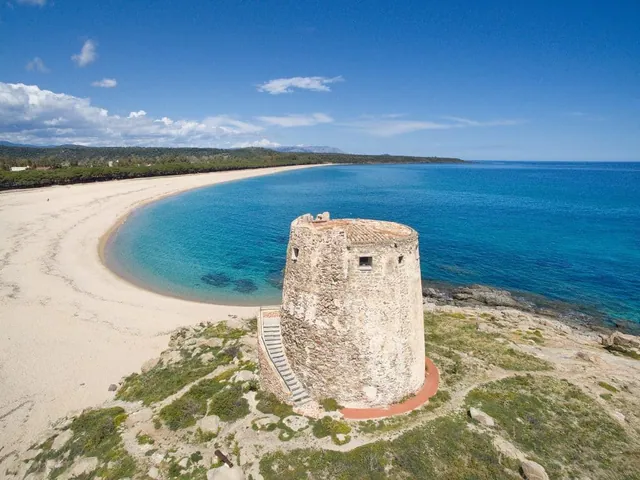
The true symbol of Bari Sardo is its impressive Spanish tower, standing on a headland above the coast. It gives its name to one of the area's best-known beaches, Torre di Barì beach. The tower divides the shoreline into two traditional sections, once known as Mari de is ominis and Mari de is femunas, recalling the former custom that separated bathing areas for men and women. Today much of the coast has beach services and tourist facilities, and the seaside area remains lively in the evening during the summer season.
The coast of Bari Sardo
Bari Sardo's long coastline is known for clear water and varied scenery. To the north, Cea beach is famous for the red porphyry sea stacks known as Is Iscoglius Arrubius, which contrast sharply with turquoise water and pale sand. Farther south, the dark cliffs of Punta Niedda and nearby headlands create one of the most distinctive landscapes on the Ogliastra coast and attract snorkelling and diving enthusiasts because of the seabed formed by ancient basaltic lava flows. The coastline continues towards Pranargia and Foddini, a long beach backed by a broad pine wood. Deeper water and exposure to wind make this stretch popular for surfing and kitesurfing.
Traditional food in Bari Sardo
Local cuisine includes Ogliastra-style culurgiones filled with potato, pecorino and mint and hand-sealed with the characteristic wheat-ear pattern; sa coccoi prena, a ring-shaped pastry filled with a similar mixture; sa coccoi, a thin focaccia made with pumpkin or onion and courgette; and finely decorated pane pintau. Bari Sardo also has a strong dairy tradition, including the local casuageru cheese. Traditional sweets include pabassinas, panisceddas, cigiri pistau and gattou.
Events in Bari SardoEvents take place throughout the year. January brings celebrations for Sant'Antonio Abate and the traditional Fogoroni bonfire. The Bari Sardo carnival attracts people from surrounding towns, while Good Friday features a Via Crucis procession and a representation of the Passion of Christ. Corpus Christi is celebrated in June, followed on the second Sunday of July by the popular Sagra de Su Nennuri. Celebrations for the patron saint, the Beata Vergine del Monserrato, take place in September.
See also
 Beach
Bari Sardo
Spiaggia di Foxi
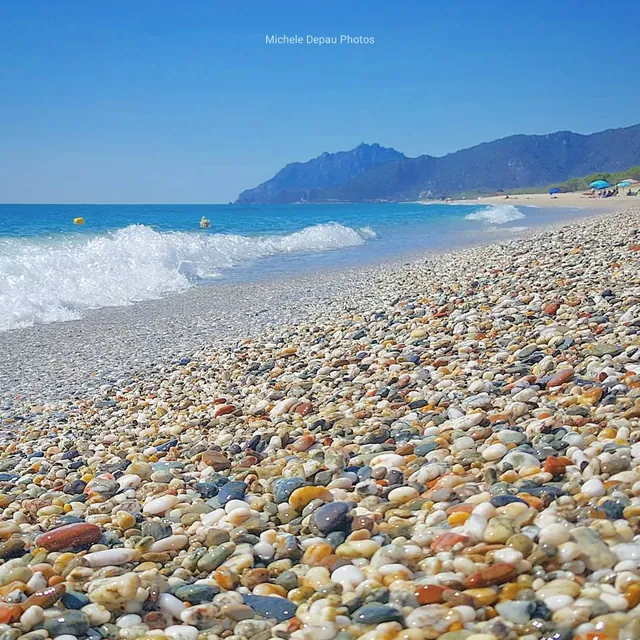
Discover Foxi Beach in Bari Sardo: pale sand, green-blue water, a stream mouth and a family-friendly setting on the Ogliastra coast.
- Beach
Bari Sardo
Torre di Barì Beach, Ogliastra
Torre di Barì beach is located near the iconic Spanish tower in Ogliastra. Its seabed is clearly visible through Sardinia's crystal-clear waters.