Place · Pula
Nora Archaeological Site
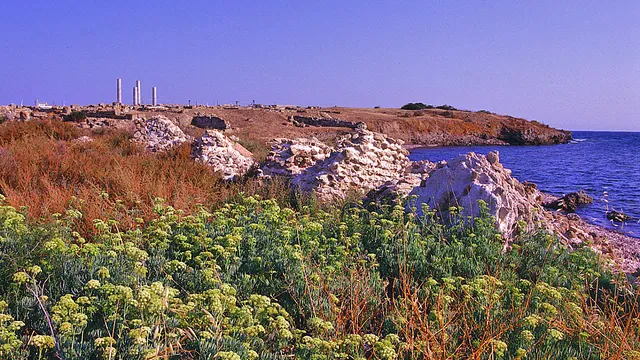
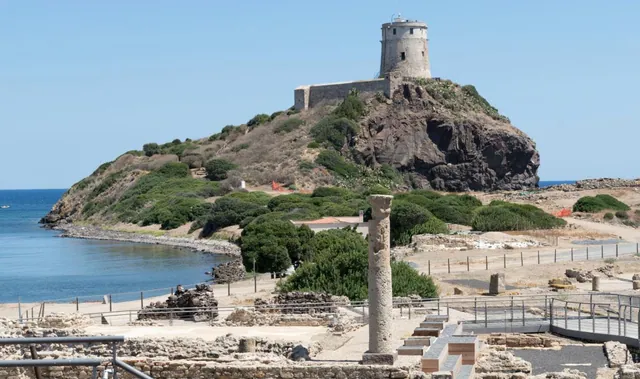
Located a short drive south-west of Cagliari, the Nora Archaeological Site is one of the most important ancient settlements in Sardinia. Founded by the Phoenicians in the 8th century BC, later developed under Carthaginian rule and then as a Roman city, Nora preserves visible layers of history in a remarkable coastal setting.
Nora’s long history
From Phoenician origins to the Roman city
Nora developed on the strategic Capo Pula peninsula, where its position supported maritime trade and regional connections. The settlement grew significantly during the Roman period and became an important urban centre with public buildings, roads and infrastructure.
Archaeological discoveries
Excavations have revealed major remains from different periods, including the Temple of Tanit and the famous Nora Stone, one of the earliest inscriptions traditionally associated with the name Sardinia. The finds reveal the cultural and religious influences that shaped the city over centuries.
Exploring the archaeological area
From the sea to the forum
The visitor route includes baths, the forum, temples, streets, residential areas, the necropolis and traces of the ancient water system. Parts of the ancient coastline are now submerged, adding another dimension to the site’s relationship with the sea.
The theatre and the House of the Tetrastyle Atrium
Nora’s Roman theatre is one of the site’s most recognisable monuments and still hosts cultural events such as La Notte dei Poeti. The House of the Tetrastyle Atrium, with its mosaics and domestic layout, offers another important glimpse of Roman life.
Beyond the archaeological ruins
Nature and culture around Nora and Pula
After visiting the archaeological area, travellers can enjoy the nearby beach and lagoon landscape or continue to Pula, whose centre has restaurants, cafés and a lively evening atmosphere. Nora therefore works well as part of a full day combining archaeology, coast and town life.